Temperature Control Using Labview-Based Fuzzy Logic on a Calorimeter for Physics Experiments
DOI:
https://doi.org/10.24036/jtein.v7i1.838Keywords:
Temperature, Calorimeter, Labview, Fuzzy, Control, PWMAbstract
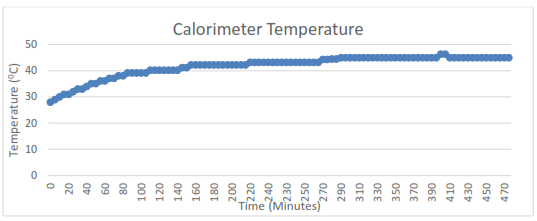
In this research, an analysis of temperature regulation was conducted on the calorimeter used for Physics practicum using the Labview controller. The purpose of this study is to obtain a stable calorimeter temperature output so that it makes it easier for the practicum to be carried out. The object to be measured is the output temperature of the calorimeter which is heated and detected by the LM-35 temperature sensor. NI-DAQ USB 6008 is used as the data acquisition device, and is connected to Labview software. The data collection process was carried out by comparing 5 tests, including testing without a Fuzzy controller, testing a Fuzzy controller with 74 percent, 80 percent, 89 percent, 90 percent from PWM maximum defuzzification. The final results show that temperature regulation on the calorimeter with Fuzzy logic is quite effective with 90 percent defuzzification, because the temperature can reach the set point value with a settling time of 40 minutes and has a steady state error of 1.1 percent.
Downloads
References
[1] J. Lopez-Gazpio, “Constructing an electronic calorimeter that students can use to make thermochemical and analytical determinations during laboratory experiments,” Journal of Chemical Education, vol. 97, no. 12, pp. 4355–4360, 2020.
[2] P. D. Cooper, “An improved calorimeter design for undergraduate isobaric solution calorimetry experiments,” Journal of Chemical Education, vol. 102, no. 2, pp. 639–643, 2025.
[3] C. de Oliveira Bellin and M. C. Lopes, “Optimizing low-cost educational calorimeters: A quantitative analysis of experimental uncertainty,” Journal of Chemical Education, vol. 102, no. 12, pp. 5376–5382, 2025.
[4] G. Quigley, P. Cumber, and S. Houston, “A novel inexpensive calorimeter as a thermodynamic laboratory experiment,” International Journal of Mechanical Engineering Education, vol. 54, no. 2, pp. 1–14, 2024.
[5] M. Hothar and L. Wadsö, “Accurate heat capacity determination of solids and liquids using a heat conduction calorimeter,” Journal of Thermal Analysis and Calorimetry, vol. 149, pp. 2179–2188, 2024.
[6] X. Luo, H. Zhang, Y. Liu, and J. Chen, “A microcalorimeter for the determination of combustion heat based on the principle of differential heat flow,” Journal of Chemical Thermodynamics, vol. 177, Art. no. 106937, 2022.
[7] H. K. Hood, E. Smit, and C. Arderne, “Sustainable and cost-effective 3D-printed calorimeters for undergraduate laboratory experiments,” Journal of Chemical Education, 2026.
[8] J. M. Kim, T. Sato, and H. Takahashi, “An MMC-based temperature control system for long-term data collection,” Journal of Low Temperature Physics, vol. 208, pp. 245–258, 2022.
[9] T. Zhang, W. Chen, and L. Xu, “A fluid temperature interpolation method for wide temperature range distributed flow calorimeter,” Review of Scientific Instruments, vol. 95, no. 10, 2024.
[10] X. Zhang, Y. Liu, H. Chen, and Z. Wang, “In-situ calibration method for thermocouples in accelerating rate calorimeter,” Thermochimica Acta, vol. 728, 2023.
[11] Y. Zhang, H. Wang, and J. Liu, “Design and implementation of fuzzy PID temperature control for industrial heating systems,” Applied Thermal Engineering, vol. 193, Art. no. 117056, 2021.
[12] M. K. Sharma, R. Gupta, and P. Singh, “Performance analysis of fuzzy logic controller for nonlinear thermal process systems,” ISA Transactions, vol. 118, pp. 112–124, 2022.
[13] A. E. Hassan, M. Farouk, and S. Abdelrahman, “Adaptive fuzzy temperature control of laboratory heating processes,” Measurement, vol. 195, Art. no. 111089, 2022.
[14] L. Chen, X. Wu, and Y. Zhao, “Real-time fuzzy control for precision thermal regulation in educational laboratory equipment,” Sensors, vol. 23, no. 4, Art. no. 2148, 2023.
[15] J. Park, K. Lee, and S. Kim, “Energy-efficient fuzzy logic temperature control in embedded heating systems,” Energy Reports, vol. 9, pp. 2154–2163, 2023.
[16] R. Kumar and S. Patel, “Comparative analysis of PID and fuzzy logic controllers for thermal process applications,” Journal of Process Control, vol. 128, pp. 33–45, 2023.
[17] H. Li, Z. Sun, and Q. Zhou, “Intelligent fuzzy control for dynamic temperature stabilization in experimental heating chambers,” IEEE Access, vol. 12, pp. 15421–15434, 2024.
[18] D. Prasetyo, A. Nugroho, and R. Firmansyah, “Implementation of fuzzy logic controller for temperature regulation in microcontroller-based heating systems,” International Journal of Intelligent Engineering Systems, vol. 17, no. 2, pp. 145–156, 2024.
[19] T. Wang and M. Zhao, “Robust fuzzy inference system for thermal disturbance rejection in temperature control applications,” Control Engineering Practice, vol. 145, Art. no. 105012, 2024.
[20] F. Rahman, S. Hidayat, and M. Irfan, “Optimization of fuzzy membership functions for precision temperature control in educational laboratory systems,” Engineering Applications of Artificial Intelligence, vol. 138, Art. no. 109125, 2025.
Downloads
Published
How to Cite
Issue
Section
License
Copyright (c) 2026 JTEIN: Jurnal Teknik Elektro Indonesia

This work is licensed under a Creative Commons Attribution 4.0 International License.